
Box Breathing is one of the simplest and most widely used breathing techniques in the world. By following a slow, steady breathing pattern, it can help reduce feelings of stress, settle racing thoughts and improve focus in just a few minutes.
Tap 2 Distract includes a free guided Box Breathing activity that is ready to use instantly. There are no logins, subscriptions or advertisements, simply press Play and follow the moving guide.


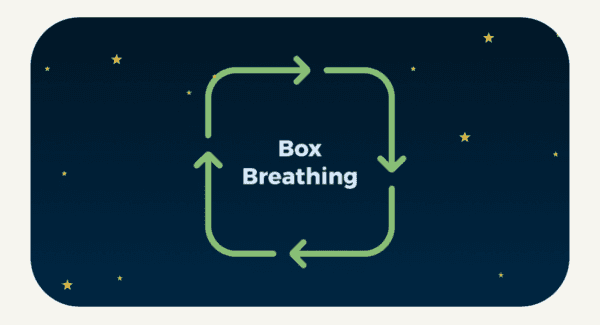
Box Breathing is a four-step breathing pattern.
| Step 1 | Step 2 | Step 3 | Step 4 |
|---|---|---|---|
| Breathe In | Hold | Breathe Out | Hold |
| Slowly breathe in through your nose for a count of four. | Hold your breath gently for a count of four. | Slowly breathe out through your mouth for a count of four. | Pause comfortably before beginning the next breath. |
This is what we have created within the Tap 2 Distract App to help simplify the process.
| 1. Inhale | 2. Hold | 3. Exhale | 4. Hold |
|---|---|---|---|
| Follow the animation as it expands. | Pause as the animation stops. | Breathe out as the animation contracts. | Pause, then begin the next cycle. |
Repeat this cycle for one to five minutes, or simply follow the guided animation in Tap 2 Distract.
Each step takes the same amount of time, creating the shape of a square or “box”. Rather than counting in your head, simply follow the moving guide on your screen.
Because it is so easy to remember, Box Breathing has become one of the most commonly recommended breathing techniques across healthcare, emergency services, education and workplaces.
Box Breathing may be useful whenever you need a moment to slow down and regain focus.
Examples include:
| Healthcare | Work & Performance | Travel & Everyday Life |
|---|---|---|
| Before a medical procedure | Before public speaking | While travelling |
| Before a blood test or vaccination | Prior to an interview | During airport delays |
| Waiting in a hospital or clinic | Before an exam | Before boarding a plane |
| During dental treatment | Preparing for an important meeting | During turbulence |
| Sitting in a busy waiting room | Managing workplace stress | During moments of anxiety |
| Before sport or competition | Before difficult conversations | |
| Waiting for important news | ||
| During sensory overload | ||
| Before going to sleep |
One of the reasons Box Breathing has become so popular is because it can be used almost anywhere.
Research has shown that slow, controlled breathing may help:
Breathing exercises are widely recognised as a complementary wellbeing strategy and are used alongside many other supportive approaches in healthcare and everyday life.
Many websites explain Box Breathing. Many videos demonstrate Box Breathing.
Tap 2 Distract lets you use Box Breathing immediately.
There is nothing to install after downloading the app, no accounts to create, no advertisements and no subscriptions.
Simply tap Play and begin.
Because the activity works offline after downloading, it is available almost anywhere, whether you’re sitting in a hospital waiting room, boarding a plane, travelling to work or simply taking a quiet moment during the day.
Every person is different, and there is no single breathing technique that works best for everyone. While this page focuses on one approach, there are many breathing exercises that may help create calm, improve focus and support emotional wellbeing.
Visit our Breathing Techniques Knowledge Hub to learn more about different breathing methods, where they are commonly used and what current research suggests about slow, controlled breathing.
You may also be interested in:
| Technique | Description |
|---|---|
| Breathing Techniques | Explore the complete guide to breathing exercises, research and practical applications. |
| Box Breathing | A structured four-step breathing technique used to encourage calm and improve focus. |
| Figure 8 Breathing | A guided visual breathing exercise that combines breathing with gentle movement. |
| Guided Simple Breathing | A simple visual breathing activity that naturally guides your breathing rhythm. |
Help provide moments of calm and support to more children and families. Donate here
Learn more about how positive distraction works
Explore Workplace Wellbeing
Written by TLC for Kids, an Australian charity supporting children and families during serious illness since 1998.
Get our latest news and updates in your inbox.